Transforming Designs into Reality with OEM Casting Capabilities
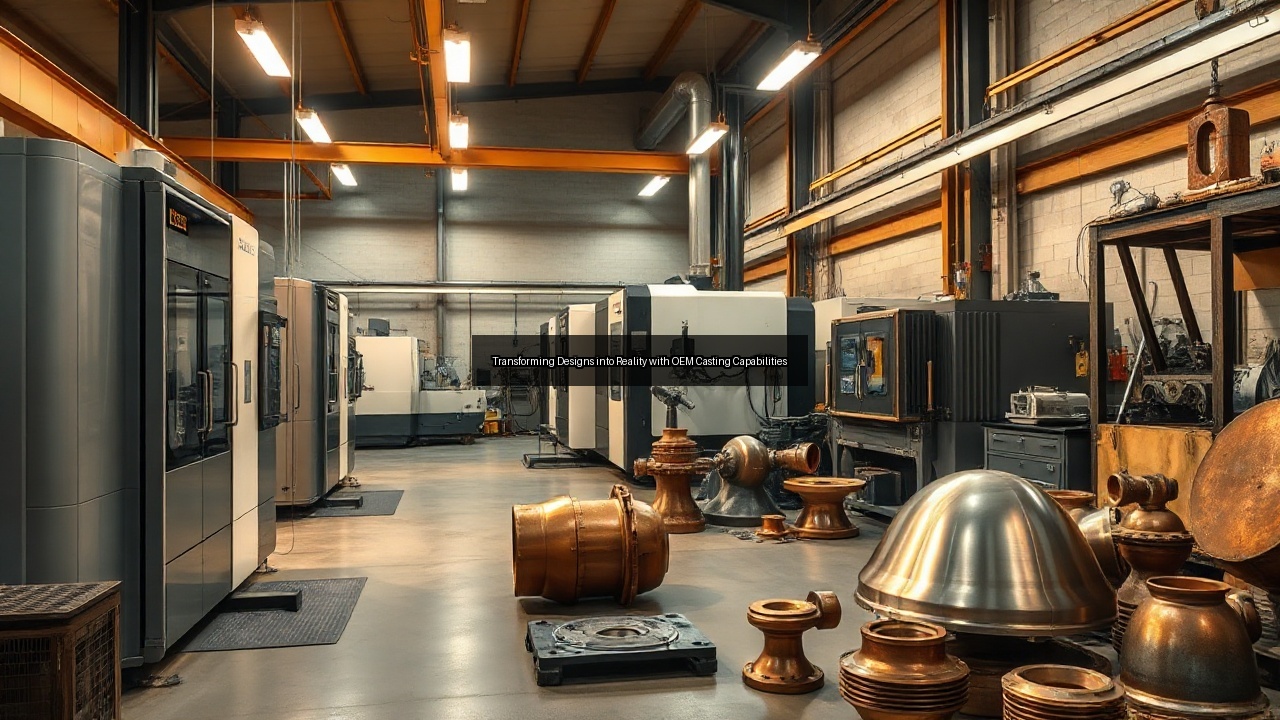
Understanding OEM Casting Capabilities
What is OEM Casting?
OEM casting refers to the process where Original Equipment Manufacturers (OEMs) produce components through various casting techniques tailored to their specific designs and requirements. This method allows manufacturers to create intricate parts with precise dimensions and tolerances. The OEM casting process encompasses several techniques, including investment casting, die casting, sand casting, and more, each suited to different materials and applications. By leveraging OEM casting capabilities, manufacturers can achieve high-quality components that meet industry standards while also ensuring efficient production timelines and cost-effectiveness.
Key Benefits of OEM Casting for Manufacturers
OEM casting offers several advantages that enhance manufacturing processes. Firstly, it enables the production of complex geometries that would be challenging or impossible to achieve with traditional machining methods. This capability allows designers to innovate without being constrained by manufacturing limitations. Secondly, OEM casting processes often result in reduced material waste compared to other methods, contributing to cost savings and sustainability efforts. Additionally, OEM castings can be produced in various materials, such as aluminum, ductile iron, and cast iron, making them versatile for numerous applications across industries. Lastly, OEM casting provides consistency in quality, which is vital for manufacturers needing to maintain brand reputation and reliability in their products.
Common Materials Used in OEM Casting
OEM casting utilizes a variety of materials, each chosen based on the specific requirements of the end product. Aluminum stands out as a popular choice due to its lightweight properties and excellent corrosion resistance. Ductile iron is favored for its strength and ductility, making it suitable for applications demanding high mechanical performance. Cast iron, with its excellent wear resistance, remains a staple in heavy machinery and automotive components. Other materials like brass and bronze are also used, particularly in applications requiring good machinability and aesthetic appeal. The selection of materials in the OEM casting process directly influences the performance, durability, and cost-effectiveness of the final castings.
Exploring Different Casting Processes
Investment Casting: Precision and Detail
Investment casting, also known as lost-wax casting, excels in producing highly intricate and detailed components. This process involves creating a wax pattern that is coated with a ceramic shell. Once the shell hardens, the wax is melted away, leaving a precise mold for pouring molten metal. This technique allows for tight tolerances and complex shapes, making it ideal for industries such as aerospace and medical devices where precision is paramount. Investment casting supports a range of materials, including aluminum, steel, and titanium, and offers excellent surface finishes that often require minimal post-casting machining. The ability to produce multiple castings simultaneously further enhances its efficiency, making it a favored choice among OEMs.
Die Casting: Efficiency and Volume
Die casting stands out for its speed and efficiency, particularly in high-volume production scenarios. This method involves injecting molten metal into a steel mold under high pressure, allowing for rapid cooling and solidification. Die casting is particularly effective for non-ferrous metals, such as aluminum and zinc, and produces strong, lightweight parts with excellent dimensional accuracy. The automated nature of die casting minimizes labor costs and maximizes production rates, making it an attractive option for OEMs looking to scale operations. Additionally, die castings typically require less finishing work, reducing overall production time and costs. Industries ranging from automotive to consumer electronics benefit significantly from die cast components.
Sand Casting: Versatility in Metal Types
Sand casting is one of the oldest and most versatile casting processes, allowing for the use of various metals, including iron, aluminum, and bronze. This method involves creating a mold from sand mixed with a binder. Once the mold is prepared, molten metal is poured into it, and after cooling, the sand is removed to reveal the casting. Sand casting is particularly advantageous for producing large parts or small production runs due to its relatively low setup costs. It accommodates a wide range of metal types and is ideal for applications requiring robust components, such as engine blocks and machine frames. The adaptability of sand casting makes it a popular choice among OEMs seeking flexibility in their manufacturing processes.
Forging vs. Casting: Choosing the Right Method
Both forging and casting are essential manufacturing methods, but each serves distinct purposes. Forging involves shaping metal through deformation, typically using compressive forces. This process enhances the material's strength and toughness, making forged components ideal for high-stress applications. In contrast, casting allows for the creation of complex shapes and intricate designs that forging cannot achieve. When determining which method to use, factors such as part geometry, material properties, and production volume come into play. For OEMs, understanding the differences between forging and casting helps in selecting the most efficient and cost-effective method for their specific needs.
The Role of Machining in OEM Casting
CNC Machining: Enhancing Precision
CNC machining plays a crucial role in enhancing the precision and quality of OEM castings. Computer Numerical Control (CNC) machining involves the use of computerized controls to operate machine tools, allowing for highly accurate and repeatable manufacturing processes. After the casting process, CNC machining refines the dimensions and surface finish of components, ensuring they meet stringent specifications. This integration of CNC machining with casting processes results in optimized components that exhibit superior performance in their applications. Furthermore, CNC machining can adapt to various materials and complex geometries, making it an invaluable asset to OEM manufacturers aiming for excellence in their products.
Post-Casting Machining Techniques
Post-casting machining techniques are vital for achieving the desired tolerances and surface finishes on OEM castings. Common techniques include milling, turning, drilling, and grinding, all aimed at refining the cast components after the initial manufacturing process. These techniques address any imperfections that may arise during casting, such as surface roughness or dimensional inaccuracies. By employing these post-casting methods, manufacturers can ensure that their products not only meet quality standards but also perform optimally in their intended applications. This attention to detail is particularly significant in high-precision industries, such as aerospace and automotive, where even minor discrepancies can lead to substantial issues.
Integrating Machining with Casting Processes
Integrating machining with casting processes enhances the overall manufacturing efficiency and product quality. By designing castings with machining in mind, OEMs can streamline the production workflow, reducing the need for extensive post-casting modifications. This integration allows manufacturers to optimize the design for both the casting and machining processes, resulting in reduced cycle times and minimized waste. Additionally, this approach can lead to cost savings, as fewer operations typically translate to lower labor and material costs. OEMs that effectively combine casting and machining capabilities stand to gain a competitive edge in the marketplace through improved product quality and faster delivery times.
Choosing the Right OEM Manufacturer
Assessing Foundry Capabilities
When selecting an OEM manufacturer for casting needs, assessing foundry capabilities is critical. A reputable foundry should possess advanced equipment, experienced personnel, and a range of casting processes to accommodate diverse requirements. Evaluate the foundry's experience with specific materials and techniques, such as investment casting or die casting, as this knowledge directly impacts the quality of the final products. Additionally, inquire about the foundry's capacity to handle high-volume orders and the flexibility to adapt to changes in design or production schedules. A thorough assessment ensures that OEMs partner with a foundry capable of delivering high-quality castings consistently.
Quality Control in OEM Castings
Quality control plays a pivotal role in the OEM casting process. Manufacturers must implement rigorous quality assurance measures to ensure that every casting meets the required specifications and standards. This includes regular inspections, testing for material properties, and monitoring the casting process itself. Tools such as Non-Destructive Testing (NDT) can detect internal flaws without damaging the components, ensuring that any issues are identified and addressed promptly. Establishing a robust quality control system not only boosts customer satisfaction but also helps maintain a manufacturer's reputation in the competitive landscape of OEM casting.
Future Trends in OEM Metal Casting
Future trends in OEM metal casting point toward increased automation, metal casting processes sustainability, and advanced materials. The adoption of Industry 4.0 technologies, such as IoT and AI, will enhance manufacturing processes, improving efficiency and accuracy. Additionally, a growing emphasis on sustainable practices will drive the development of eco-friendly materials and recycling methods within the casting industry. Innovations in additive manufacturing and 3D printing may also lead to new opportunities for OEMs to create complex geometries that traditional casting methods cannot achieve. Staying abreast of these trends will allow manufacturers to remain competitive and responsive to market demands.